Second Life Loop Sound Stop Loop Delay Start Loop Again
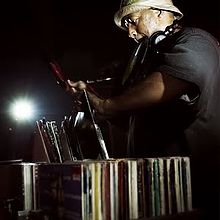
In music, sampling is the reuse of a portion (or sample) of a sound recording in another recording. Samples may comprise elements such every bit rhythm, melody, voice communication, sounds or entire bars of music, and may exist layered, equalized, sped up or slowed downward, repitched, looped, or otherwise manipulated. They are usually integrated using hardware (samplers) or software such every bit digital sound workstations.
A process similar to sampling originated in the 1940s with musique concrète, experimental music created by splicing and looping tape. The mid-20th century saw the introduction of keyboard instruments that played sounds recorded on tape, such as the Mellotron. The term sampling was coined in the tardily 1970s past the creators of the Fairlight CMI, a synthesizer with the ability to record and play dorsum short sounds. As engineering improved, cheaper standalone samplers with more memory emerged, such as the Eastward-mu Emulator, Akai S950 and Akai MPC.
Sampling is a foundation of hip hop music, which emerged when producers in the 1980s began sampling funk and soul records, particularly drum breaks. Information technology has influenced many genres of music, particularly electronic music and pop. Samples such as the Amen intermission, the "Funky Drummer" pulsate interruption and the orchestra hit have been used in thousands of recordings; James Brown, Loleatta Holloway, Fab Five Freddy and Led Zeppelin are amidst the nigh sampled artists. The offset album created entirely from samples, Endtroducing by DJ Shadow, was released in 1996.
Sampling without permission tin infringe copyright or may exist fair use. Clearance, the process of acquiring permission to use a sample, can be circuitous and costly; samples from well known sources may be prohibitively expensive. Courts accept taken different positions on whether sampling without permission is permitted. In Grand Upright Music, Ltd. v. Warner Bros. Records Inc (1991) and Bridgeport Music, Inc. v. Dimension Films (2005), the courts ruled that unlicensed sampling constitutes copyright infringement; yet, VMG Salsoul v Ciccone (2016) constitute that unlicensed samples constituted de minimis copying, and did non infringe copyright.[ not verified in body ] Though some artists sampled past others take complained of plagiarism or lack of inventiveness, many commentators have argued that sampling is a creative process.
Precursors [edit]

The Phonogene, a 1940s instrument which plays back sounds from record loops
In the 1940s, French composer Pierre Schaeffer developed musique concrète, an experimental form of music created past recording sounds to tape, splicing them, and manipulating them to create audio collages. He used sounds from sources such as the human body, locomotives, and kitchen utensils.[1] The method as well involved tape loops, splicing lengths of tape end to cease so a sound could be played indefinitely.[1] Schaeffer developed the Phonogene, which played loops at 12 different pitches triggered by a keyboard.[1]
Composers including John Cage, Edgar Varèse, Karheinz Stockhausen and Iannis Xenakis experimented with musique concrète, [1] and Bebe and Louis Barron used it to create the first totally electronic film soundtrack, for the 1956 science fiction moving picture Forbidden Planet. Musique concrète was brought to a mainstream audience by the BBC Radiophonic Workshop, which used the techniques to produce soundtracks for shows including Medico Who.[1]
In the 1960s, Jamaican dub reggae producers such as King Tubby and Lee "Scratch" Perry began using recordings of reggae rhythms to produce riddim tracks, which were then deejayed over.[2] [3] Jamaican immigrants introduced the techniques to American hip hop music in the 1970s.[3] British producer Brian Eno cited German musician Holger Czukay's experiments with Dictaphones and shortwave radios as examples of early sampling.[4]
Samplers [edit]

The Fairlight CMI, a sampler and synthesizer released in 1979. The designers coined the term sampling to describe one of its features.
The Guardian described the Chamberlin as the first sampler, developed by the English engineer Harry Chamberlin in the 1940s. The Chamberlin used a keyboard to trigger a series of tape decks, each containing eight seconds of sound. Like technology was popularised in the 60s with the Mellotron.[five] In 1969, the English engineer Peter Zinovieff adult the first digital sampler, the EMS Musys.[five]
The term sample was coined by Kim Ryrie and Peter Vogel to draw a feature of their Fairlight CMI synthesizer, launched in 1979.[1] While developing the Fairlight, Vogel recorded around a second of a piano performance from a radio broadcast, and discovered that he could imitate a piano past playing the recording dorsum at different pitches. The upshot better resembled a real pianoforte than sounds generated by synthesizers.[6]
Compared to later samplers, the Fairlight was express; it allowed command over pitch and envelope, and could only record a few seconds of sound. Nonetheless, the sampling function became its about pop characteristic.[1] Though the concept of reusing recordings in other recordings was not new, the Fairlight's pattern and congenital-in sequencer simplified the procedure.[1]

The Akai MPC, an influential sampler produced from 1988
The Fairlight inspired competition, improving sampling technology and driving down prices.[1] Early on competitors included the Due east-mu Emulator[ane] and the Akai S950.[seven] Pulsate machines such as the Oberheim DMX and Linn LM-i incorporated samples of pulsate kits and percussion rather than generating sounds from circuits.[eight] Early on samplers could store samples of simply a few seconds in length, only this increased with improved memory.[ix]
In 1988, Akai released the first MPC sampler,[x] which allowed users to assign samples to pads and trigger them independently, similarly to playing a keyboard or pulsate kit.[eleven] It was followed past competing samplers from companies including Korg, Roland and Casio.[12] Today, most samples are recorded and edited using digital audio workstations such as Pro Tools and Ableton Alive.[13] [9]
Impact [edit]
Sampling has influenced many genres of music,[5] particularly popular, hip hop and electronic music;[14] Guardian journalist David McNamee likened its importance in these genres to the guitar'due south importance in rock.[5] Sampling is a cardinal element of remix culture.[15] Normally sampled elements include strings, basslines, drum loops, song hooks, or entire confined of music, specially from soul records.[xvi] Samples may be layered,[17] equalized,[17] sped upwardly or slowed downwardly, repitched, looped, or otherwise manipulated.[xiv] As sampling technology has improved, the possibilities for manipulation have grown.[14]
Early works [edit]
Using the Fairlight, the "first truly world-changing sampler",[5] producer Trevor Horn became the "key builder" in incorporating sampling into pop music in the 1980s.[five] Other users of the Fairlight included Kate Bush, Peter Gabriel, Thomas Dolby, Duran Duran, Herbie Hancock, Todd Rundgren, Icehouse and Ebn Ozn.[vii] In the 1980s, samples were incorporated into synthesizers and music workstations, such as the bestselling Korg M1, released in 1988.[12]
The Akai MPC, released in 1988, had a major influence on electronic and hip hop music,[18] [11] allowing artists to create elaborate tracks without other instruments, a studio or formal music cognition.[11] Its designer, Roger Linn, anticipated that users would sample short sounds, such as individual notes or pulsate hits, to apply as building blocks for compositions; still, users sampled longer passages of music.[ix] In the words of Greg Milner, author of Perfecting Audio Forever, musicians "didn't simply desire the sound of John Bonham'south kick drum, they wanted to loop and repeat the whole of 'When the Levee Breaks'."[ix] Linn said: "Information technology was a very pleasant surprise. After threescore years of recording, there are so many prerecorded examples to sample from. Why reinvent the bicycle?"[9]
Stevie Wonder'due south 1979 anthology Journeying Through the Secret Life of Plants may take been the first album to make extensive employ of samples.[5] The Japanese electronic band Xanthous Magic Orchestra were pioneers in sampling,[19] [20] [21] amalgam music by cutting fragments of sounds and looping them;[21] their album Technodelic (1981) is an early example of an album consisting mostly of samples.[20] [22] My Life in the Bush of Ghosts (1981) by David Byrne and Brian Eno is some other of import early work of sampling, incorporating samples of sources including Arabic singers, radio DJs and an exorcist.[23] Musicians had used similar techniques before, but, according to Guardian writer Dave Simpson, sampling had never before been used "to such cataclysmic effect".[24] Eno felt the album's innovation was to make samples "the pb vocal".[4] Large Sound Dynamite pioneered sampling in stone and pop with their 1985 album This Is Big Audio Dynamite.[25]
Hip hop [edit]

Sampling is 1 of the foundations of hip hop, which emerged in the 1980s.[26] Hip hop sampling has been likened to the origins of blues and rock, which were created by repurposing existing music.[xv] Guardian journalist David McNamee wrote that, in the 1980s, sampling in hip hop had been a political human activity, the "working-grade black respond to punk".[13]
Before the rise of sampling, DJs used turntables to loop breaks from records, which MCs would rap over.[27] Compilation albums such every bit Ultimate Breaks and Beats compiled tracks with drum breaks and solos intended for sampling, and were aimed at DJs and hip hop producers. [27] In 1986, the tracks "South Bronx", "Eric B. is President" and "It's a Demo" sampled the funk and soul tracks of James Brown, particularly a pulsate break from "Funky Drummer" (1970), helping popularize the technique.[xiv]
The advent of affordable samplers such every bit the Akai MPC (1988) made looping easier.[27] Guinness World Records cites DJ Shadow'southward acclaimed hip hop album Endtroducing (1996), made on an MPC60,[28] as the showtime album created entirely from samples.[29] [30] The E-mu SP-1200, released in 1987, had a ten-second sample length and a distinctive "gritty" audio, and was used extensively past Due east Coast producers during the gilt age of hip hop of the late 1980s and early 90s.[31]
Common samples [edit]
A vii-second pulsate break in the 1969 rails "Amen, Brother", known as the Amen suspension, became popular with American hip hop producers and then British jungle producers in the early 1990s.[27] It has been used in thousands of recordings, including songs by stone bands such every bit Oasis and theme tunes for tv shows such every bit Futurama.[27] According to WhoSampled, a user-generated website cataloging samples, "Amen, Brother" is the most sampled track in history, appearing in more 5000 tracks as of 2021.[32]
Other widely sampled drum breaks appear in the 1970 James Brown song "Funky Drummer"; the 1972 Lyn Collins song "Retrieve (Nigh It)", written by Dark-brown (the Think suspension);[33] and Led Zeppelin'due south 1971 recording of "When the Levee Breaks", played past John Bonham and used by artists including the Beastie Boys, Dr. Dre, Eminem and Massive Attack.[34]
In 2018, the Smithsonian cited the almost sampled rail as "Change the Beat" by Fab 5 Freddy, which appears in more than than i,150 tracks.[35] WhoSampled cites James Brown as the most sampled artist, actualization in more than 3000 tracks.[36] The Independent named the American vocalizer Loleatta Holloway the most sampled female phonation in pop music; her vocals were sampled in firm and dance tracks such as "Ride on Time" by Black Box, the bestselling single of 1989.[37]
The orchestra hit originated as a sound on the Fairlight sampled from Stravinsky's 1910 orchestral work Firebird Suite [38] and became a hip hop cliche.[39] MusicRadar cited the Null-M Datafiles sample libraries as a major influence on dance music in the early 90s, becoming the "de facto source of breakbeats, bass and vocal samples".[40]
Legal and ethical issues [edit]
To legally utilise a sample, an artist must acquire legal permission from the copyright holder, a potentially lengthy and complex process known as clearance.[xvi] Sampling without permission can breach the copyright of the original sound recording, of the composition and lyrics, and of the performances, such as a rhythm or guitar riff. The moral rights of the original artist may as well exist breached if they are not credited or object to the sampling.[16] In some cases, sampling is protected nether American fair employ laws,[16] which grant "limited employ of copyrighted material without permission from the rights holder".[41]
Richard Lewis Spencer, who owned the copyright for the widely sampled Amen intermission, never received royalties for its use; he condemned the sampling equally plagiarism,[42] but after said it was flattering.[27] Journalist Simon Reynolds likened the state of affairs to "the man who goes to the sperm bank and unknowingly sires hundreds of children".[27] In 1989, the Turtles sued De La Soul for using an uncleared sample on their album 3 Feet High and Rising. The Turtles vocaliser Marker Volman told the Los Angeles Times: "Sampling is just a longer term for theft. Anybody who tin can honestly say sampling is some sort of creativity has never washed anything artistic."[43] The example was settled out of court and fix a legal precedent that had a spooky issue on sampling in hip hop.[43]
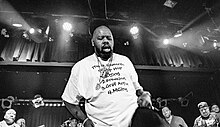
In 1991, the songwriter Gilbert O'Sullivan sued the rapper Biz Markie after Markie sampled O'Sullivan's "Alone Again (Naturally)" on the anthology I Need a Haircut. The court ruled that sampling without permission infringed copyright. Instead of asking for royalties, O'Sullivan forced Markie'southward characterization Warner Bros to call back the album until the song was removed.[44] Nelson George described it as the "near damaging example of anti-hip hop vindictiveness", which "sent a arctic through the industry that is still felt".[44] Afterward the decision, Hank Shocklee, producer of the hip hop group Public Enemy, predicted that information technology would delay record product, saying, "It's going to impact anybody'southward process ... It's impossible to go along up with every snippet of sound you lot utilize."[45] The Washington Post wrote in 2018 that "no court determination has changed the sound of popular music every bit much as this", likening it to banning a musical instrument.[46]
Since the O'Sullivan lawsuit, samples on commercial recordings take typically been taken either from obscure recordings or cleared, an ofttimes expensive option only bachelor to successful acts.[46] According to the Guardian, "Sampling became risky concern and a rich human's game, with record labels regularly checking if their musical holding had been tea-leafed."[xiii] For less successful artists, the legal implications of using samples pose obstacles; according to Fact, "For a bedroom producer, clearing a sample tin be nearly impossible, both financially and in terms of administration."[fourteen]
The 1989 Beastie Boys album Paul'south Boutique is composed virtually entirely of samples, most of which were cleared "easily and affordably"; the clearance process would be much more expensive today.[47] In 2000, jazz flautist James Newton filed a claim confronting the Beastie Boys' 1992 single "Pass the Mic", which samples his composition "Choir". The judge found that the sample, comprising six seconds and three notes, was de minimis and did not require clearance. Newton lost appeals in 2003 and 2004.[48] In 2019, the European Court of Justice ruled that producers Moses Pelham and Martin Haas had illegally sampled a drum sequence from the 1977 Kraftwerk runway "Metal on Metal" for the Sabrina Setlur song "Nur Mir".[49] The court ruled that permission was required for recognizable samples; modified, unrecognizable samples could yet be used without authorization.[49]
Contemporary utilize [edit]
Co-ordinate to Fact, early hip hop sampling was governed by "unspoken" rules forbidding the sampling of contempo records, reissues, other hip hop records, or from non-vinyl sources, among other restrictions.[26] These rules were relaxed as younger producers took over: "For many producers today it is no longer a case of 'should I sample this?' but of 'can I get away with sampling this?'. Thus the ethics of sampling unravelled every bit the practice became e'er more ubiquitous."[26]
The Washington Postal service described the modern use of well known samples, such equally on records by Kanye W, as an act of conspicuous consumption similar to flaunting cars or jewelry.[46] Due west has been sued several times over his use of samples.[14] Some have accused the law of restricting creativity, while others argue information technology forces producers to innovate.[46] Sampling can help popularize the sampled work; for example, the Desiigner rails "Panda" topped the Billboard Hot 100 after Westward sampled it on "Father Stretch My Hands, Pt. two".[14] Some record labels and other music licensing companies take simplified their clearance processes past "pre-clearing" their records;[50] for example, the Los Angeles record label Now-Over again Records has cleared songs produced for West and Pusha T in a affair of hours.[51] [52]
Recreating samples [edit]
To circumvent legal bug, producers may recreate a recording rather than sample it. This requires but the publisher's permission, and gives the artist more freedom to alter constituent components such as dissever guitar and pulsate tracks.[53]
Some producers have opted to use stock library music in their productions as samples.[54] [55] [56] Commencement in the 2000s, some music producers began releasing full compositions with the intention for them to be manipulated past other producers in the tradition of library music.[57] [58] Frequently released in packs, the compositions are used by beatmakers and offering more than a single sound or musical phrase. Producer Frank Dukes and his Kingsway Music Library is often credited in popularizing the craft;[57] [59] [60] his sample compositions have been used for the likes of Drake's "0 to 100 / The Catch Upward" and Kanye Westward's "Real Friends".[61]
See also [edit]
- Interpolation
- Mashup
- Musical quotation
- Plunderphonics
- Recombinant culture
- Riddim
References [edit]
- ^ a b c d due east f g h i j Howell, Steve (August 2005). "The Lost Art Of Sampling: Part 1". Audio on Sound. Archived from the original on 9 December 2018. Retrieved 12 October 2018.
- ^ Reggae Wisdom: Proverbs in Jamaican Music. Univ. Press of Mississippi. 2001. ISBN9781604736595 – via Google Books.
- ^ a b Bryan J. McCann, The Mark of Criminality: Rhetoric, Race, and Gangsta Rap in the War-On-Crime ERA, pages 41-42, University of Alabama Press
- ^ a b Sheppard, David (July 2001). "Cash for Questions". Q.
- ^ a b c d e f k McNamee, David (28 September 2009). "Hey, what's that audio: Sampler". The Guardian. Archived from the original on iv March 2014. Retrieved 12 October 2018.
- ^ Hamer, Mick (26 March 2015). "Interview: Electronic maestros". New Scientist. Reed Business concern Information. Archived from the original on 8 July 2008. Retrieved four April 2016.
- ^ a b "A brief history of sampling". MusicRadar. Archived from the original on 26 June 2019. Retrieved 12 October 2018.
- ^ McNamee, David (22 June 2009). "Hey, what'southward that sound: Linn LM-ane Drum Computer and the Oberheim DMX". the Guardian. Archived from the original on 26 October 2018. Retrieved ix February 2018.
- ^ a b c d e Milner, Greg (iii November 2011). Perfecting Audio Forever: The Story of Recorded Music. Granta Publications. ISBN9781847086051. Archived from the original on 9 December 2018. Retrieved 7 December 2018.
- ^ "The 10 most important hardware samplers in history". MusicRadar. Archived from the original on 2 July 2018. Retrieved 13 May 2018.
- ^ a b c "Meet the unassuming drum machine that changed music forever". Voice. Archived from the original on 21 December 2018. Retrieved eleven May 2018.
- ^ a b Vail, Mark (Feb 2002). "Korg M1 (Retrozone)". Audio on Sound. Archived from the original on 2 November 2019. Retrieved six November 2019.
- ^ a b c McNamee, David (16 February 2008). "When did sampling become and then non-threatening?". the Guardian. Archived from the original on 31 March 2019. Retrieved 12 October 2018.
- ^ a b c d eastward f g "Untangling the knotty world of hip-hop copyright". FACT Magazine: Music News, New Music. 25 June 2016. Archived from the original on 14 October 2018. Retrieved fourteen October 2018.
- ^ a b "Remixing Culture And Why The Fine art Of The Mash-Up Matters". TechCrunch. Archived from the original on 12 February 2020. Retrieved 16 Oct 2018.
- ^ a b c d "Sample Clearance |". www.soundonsound.com. Archived from the original on 14 Oct 2018. Retrieved 14 October 2018.
- ^ a b "Only a sample". The Economist. Archived from the original on 14 October 2018. Retrieved 14 Oct 2018.
- ^ "Hip-hop's most influential sampler gets a 2017 reboot". Engadget. Archived from the original on 31 March 2019. Retrieved 3 April 2018.
- ^ Mayumi Yoshida Barakan & Judith Connor Greer (1996). Tokyo city guide. Tuttle Publishing. p. 144. ISBN0-8048-1964-v. Archived from the original on 23 March 2017. Retrieved 6 June 2011.
- ^ a b Carter, Monica (xxx June 2011). "Information technology'due south Like shooting fish in a barrel When You're Big In Nihon: Yellow Magic Orchestra at The Hollywood Bowl". The Vinyl District. Archived from the original on 21 March 2012. Retrieved 22 July 2011.
- ^ a b Condry, Ian (2006). Hip-hop Japan: rap and the paths of cultural globalization. Knuckles Academy Press. p. 60. ISBN0-8223-3892-0. Archived from the original on xx April 2019. Retrieved 11 June 2019.
- ^ "The Essential... Yellow Magic Orchestra". FACT Magazine. 22 January 2015. Archived from the original on 17 April 2019. Retrieved 11 June 2019.
- ^ "Brian Eno and David Byrne, My Life in the Bush-league of Ghosts | | guardian.co.uk Arts". 24 March 2006. Archived from the original on 20 August 2007. Retrieved 14 Oct 2018.
- ^ Simpson, Dave (24 March 2006). "Brian Eno and David Byrne, My Life in the Bush of Ghosts". The Guardian. London. Retrieved 25 March 2012.
- ^ Myers, Ben (20 January 2011). "Big Audio Dynamite: more pioneering than the Clash?". The Guardian. London. Archived from the original on fourteen February 2017. Retrieved xvi December 2016.
- ^ a b c "Don't boot the ideals out of sampling: picking upwardly the bullets from The Weeknd's disharmonism with Portishead - Page 2 of two - FACT Magazine: Music News, New Music". FACT Magazine: Music News, New Music. 2 August 2013. Archived from the original on 12 October 2018. Retrieved 12 October 2018.
- ^ a b c d e f g "Vii seconds of fire". The Economist. Archived from the original on 14 Oct 2018. Retrieved 14 October 2018.
- ^ Taylor, Ken (14 August 2012). "The exclusive interview; 'I experience like I've done a lot for the MPC'". Beatport. Archived from the original on 24 April 2013. Retrieved 16 March 2013.
- ^ "Start album made completely from samples". Guinness World Records. Archived from the original on 24 April 2013. Retrieved 20 March 2013.
- ^ Sullivan, James (thirty March 2012). "DJ Shadow's influence looms big". The Boston World. Archived from the original on 24 April 2013. Retrieved 23 March 2013.
- ^ "The Dingy Heartbeat of the Aureate Age | Village Voice". world wide web.villagevoice.com. 6 Nov 2007. Archived from the original on 1 May 2019. Retrieved 17 July 2019.
- ^ Holbrook, Emma (5 May 2021). "The Greatest Samples in Music". TheFortyFive . Retrieved 8 August 2021.
- ^ "Spotify playlist: 50 tracks that sample the 'Think' break". Mixmag . Retrieved xxx Jan 2021.
{{cite web}}: CS1 maint: url-status (link) - ^ Cheal, David (21 February 2015). "The Life of a Song: 'When the Levee Breaks'". Financial Times. Archived from the original on 29 November 2018. Retrieved 29 November 2018.
- ^ Eveleth, Rose. "The globe'due south most sampled vocal is "Change the Beat" by Fab 5 Freddy". Smithsonian. Archived from the original on 12 October 2018. Retrieved 12 October 2018.
- ^ X, Dharmic (twenty February 2014). "James Brownish is manifestly the about sampled artist of all time". Complex . Retrieved 1 August 2020.
{{cite web}}: CS1 maint: url-status (link) - ^ Perrone, Pierre (25 March 2011). "Loleatta Holloway: Much-sampled disco diva who sued Blackness Box over their worldwide hit 'Ride on Time'". The Independent. Archived from the original on eight July 2019. Retrieved eight August 2019.
- ^ Fink (2005, p. 1) harvtxt error: no target: CITEREFFink2005 (help)
- ^ Fink (2005, p. 6) harvtxt error: no target: CITEREFFink2005 (help)
- ^ Tech, Tim Cant 2017-07-19T08:45:00 199Z. "10 classic sample libraries that changed music". MusicRadar. Archived from the original on 26 Oct 2019. Retrieved 26 Oct 2019.
- ^ Siedel, George (2016). The 3 Pillar Model For Business organization Decisions: Strategy, Law, Ethics. Michigan: Van Rye Publishing. p. 135. ISBN978-0-9970566-1-7.
- ^ "Seven seconds of fire". The Economist. 17 December 2011. ISSN 0013-0613. Retrieved 20 March 2019.
- ^ a b Runtagh, Hashemite kingdom of jordan (viii June 2016). "Songs on Trial: 12 Landmark Music Copyright Cases". Rolling Stone. Archived from the original on 14 October 2018. Retrieved 12 October 2018.
- ^ a b George, Nelson (26 April 2005). Hip Hop America. Penguin. ISBN9781101007303. Archived from the original on 23 March 2017. Retrieved xi December 2016.
- ^ Marking, Kemp (25 November 2021). "The Death of Sampling". Retrieved 16 March 2022.
- ^ a b c d Richards, Chris. "The court case that changed hip-hop — from Public Enemy to Kanye — forever". Washington Post. Archived from the original on 12 Oct 2018. Retrieved 12 October 2018.
- ^ Tingen, Paul (May 2005). "The Dust Brothers: Sampling, Remixing & The Boat Studio". Sound on Sound. Cambridge, Great britain: SOS Publications Grouping. ISSN 1473-5326. Archived from the original on 29 May 2016. Retrieved 25 July 2011.
- ^ "Beastie Boys Emerge Victorious In Sampling Suit". Billboard. nine November 2004. Archived from the original on 19 November 2017. Retrieved 24 May 2020.
- ^ a b "Kraftwerk win 20-year sampling copyright example". BBC News. 30 July 2019. Archived from the original on 5 March 2020. Retrieved 1 February 2020.
- ^ "Futurity of sample clearance: As easy equally tagging friends on Facebook?". MusicTech. 13 September 2019. Retrieved four June 2021.
- ^ Weingarten, Christopher R. (28 June 2018). "Inside the Labels Where Kanye West Finds Many of His Best Samples". Rolling Rock . Retrieved iv June 2021.
- ^ Needham, Jack (29 November 2019). "How to sample without getting sued". Red Bull . Retrieved 4 June 2021.
{{cite web}}: CS1 maint: url-status (link) - ^ Inglis, Sam (September 2003). "Steve Gibson & Dave Walters: Recreating Samples |". Sound on Sound. Archived from the original on 14 October 2018. Retrieved fourteen October 2018.
- ^ Sommer, Tia (sixteen April 2019). "Hip-Hop Artists Use Stock Library Music? (Yes – and Yous Should Too!)". Copyright Clearance Center . Retrieved four June 2021.
- ^ Hann, Michael (21 September 2018). "Subscribe to read | Fiscal Times". Financial Times . Retrieved 4 June 2021.
- ^ Lefrak, Mikaela (24 April 2020). "The Library Of Congress Wants DJs (And Y'all) To Brand Beats Using Its Sound Collections". WAMU . Retrieved iv June 2021.
{{cite web}}: CS1 maint: url-status (link) - ^ a b Herbert, Conor (21 Oct 2019). "Library Music Is Irresolute the Sampling Game In Hip-Hop". DJBooth . Retrieved 4 June 2021.
{{cite spider web}}: CS1 maint: url-status (link) - ^ Dandridge-Lemco, Ben (8 May 2020). "Get to Know the Loopmakers Behind Rap's Biggest Songs". Pitchfork . Retrieved iv June 2021.
- ^ Adams, Kelsey (27 August 2020). "Frank Dukes' Kingsway Music Library Could Change Sampling Forever". Complex . Retrieved 4 June 2021.
{{cite spider web}}: CS1 maint: url-status (link) - ^ Feeney, Nolan (2019). "How Pop Hitmaker Frank Dukes Is Rewriting the Rules of Collaboration". Billboard . Retrieved iv June 2021.
{{cite magazine}}: CS1 maint: url-condition (link) - ^ "Nearly The Kingsway Music Library". Kingsway Music Library by Frank Dukes - Original Samples & Music . Retrieved 4 June 2021.
Farther reading [edit]
- Katz, Mark. "Music in 1s and 0s: The Art and Politics of Digital Sampling." In Capturing Sound: How Technology has Inverse Music (Berkeley: Academy of California Printing, 2004), 137–57. ISBN 0-520-24380-three
- McKenna, Tyrone B. (2000) "Where Digital Music Technology and Law Collide – Contemporary Bug of Digital Sampling, Appropriation and Copyright Police" Journal of Information, Law & Technology.
- Challis, B (2003) "The Song Remains The Aforementioned – A Review of the Legalities of Music Sampling"
- McLeod, Kembrew; DiCola, Peter (2011). Artistic License: The Constabulary and Civilization of Digital Sampling . Duke University Press. ISBN978-0-8223-4875-7.
- Ratcliffe, Robert. (2014) "A Proposed Typology of Sampled Material within Electronic Trip the light fantastic Music." Dancecult: Journal of Electronic Dance Music Culture half dozen(1): 97-122.
 | Wikiquote has quotations related to: Sampling |
Source: https://en.wikipedia.org/wiki/Sampling_%28music%29

Post a Comment for "Second Life Loop Sound Stop Loop Delay Start Loop Again"